
 INRhttps://preschool.littlemillennium.com/little-millennium/preschool-in-ahmedabad/preschool-in-khoraj/little-millennium-preschool-in-khoraj-ahmedabad--4sok3z/articles/the-importance-of-social-skills-in-preschool-in-kh--ca791c22-7c00-44ec-8e3e-6ee44096afe5
Little Millennium Preschool, Khoraj, ahmedabad
Preschool Pre School in Khoraj, Ahmedabad, Gujarat
No 1008/B, 4 Pehel Lake View, Beside Auda Lake, Nearby Vaishnovdevi Circle, Khoraj, ahmedabad, gujarat - 382501
Request A Call Back
Little Millennium Preschool Social Feeds in Khoraj, ahmedabad
The Importance of Social Skills in Preschool in Khoraj, ahmedabad
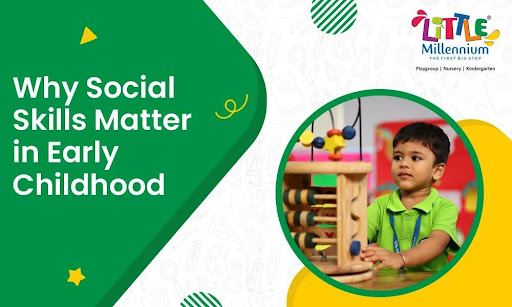
In early childhood education, parents often focus first on academic readiness—letters, numbers, basic cognitive skills. But what truly shapes a child’s future success often comes from something less obvious but just as vital: social skills. From preschool onward, developing strong social abilities is crucial—not just for learning, but for becoming compassionate, confident human beings.
If you’re selecting a school for your little one, it’s important to understand how social skills are nurtured—and why they matter so much.
Understanding Social Skills in Preschoolers
Around ages three to four, children begin interacting more with peers beyond the family. They learn about friendship, sharing, and handling emotions like disappointment or frustration. These early interactions lay the groundwork for more complex relationships later on—how they resolve conflicts, express themselves, and understand social expectations.
Why Social Skills Are So Important
Building Future Relationships
Every interaction in preschool teaches children what it means to be caring, considerate, and respectful. These lessons shape how they make friends and connect with others throughout life.Emotional Regulation
Children learn to wait, cope when things don’t go their way, and celebrate others. Over time, these experiences help them manage big feelings in healthier ways.Better Collaboration & Learning
Skills like listening, following instructions, working in groups, and communicating needs are underpinned by social development. These help in classroom success and beyond.Conflict Resolution & Empathy
Disagreements are inevitable but valuable. They teach kids how to negotiate, see others’ perspectives, and find solutions together — key traits of empathy and problem-solving.
Key Social Skills Developed in Early Childhood Education
Here are a few of the core social skills that preschool helps children build:
Sharing & Taking Turns: Learning to put others first sometimes, and waiting patiently.
Empathy: Understanding and caring about how others feel.
Listening: Giving attention, absorbing instructions, and responding thoughtfully.
Cooperation: Working with others, adapting to group dynamics, and sharing tasks.
Self-Expression: Communicating thoughts and feelings clearly—through words, play, or art.
How Little Millennium Fosters Social Skills
Little Millennium’s curriculum is specially designed to build social skills as part of a holistic growth model. According to their Seven Petal Curriculum, social-emotional development is one of the key domains.
Here are some of the ways Little Millennium supports these skills:
Role-play, group work, and interactive games to encourage cooperation and empathy.
Collaborative tasks where children share responsibilities and learn to communicate.
Activities that align with developmental milestones—so children gradually gain confidence in social settings.
A safe, nurturing environment with well-trained teachers who guide social interactions, help children navigate conflicts, and model positive behaviour.
Final Thoughts: Cultivating Confident, Empathetic Kids
Early childhood education is much more than preparation for school—it’s where foundational social skills are formed. Teaching children to share, resolve conflict, express themselves, and empathise sets them up not just for academic success, but for life.
If you are looking for a preschool in Khoraj, ahmedabad that values social growth as much as academic learning, Little Millennium offers a balanced, research-backed curriculum built for the whole child. Visit the nearest centre to see how they nurture these important life skills in your little learner.