

 ₹https://preschool.littlemillennium.com/little-millennium/preschool-in-muzaffarnagar/preschool-in-jansath-road/little-millennium-preschool-in-jansath-road-muzaffarnagar--54fhXG/articles/learning-through-play-how-everyday-fun-builds-real--6ab23c0e-845d-4136-bd17-c153a8b2a6c7
Little Millennium Preschool, Jansath Road, muzaffarnagar
Preschool Pre School in Jansath Road, Muzaffarnagar, Uttar Pradesh
Plot No 37, 40 Feet Road, Nearby Vishnudham Temple, Jansath Road, muzaffarnagar, uttar pradesh - 251001
Request A Call Back
Little Millennium Preschool Social Feeds in Jansath Road, muzaffarnagar
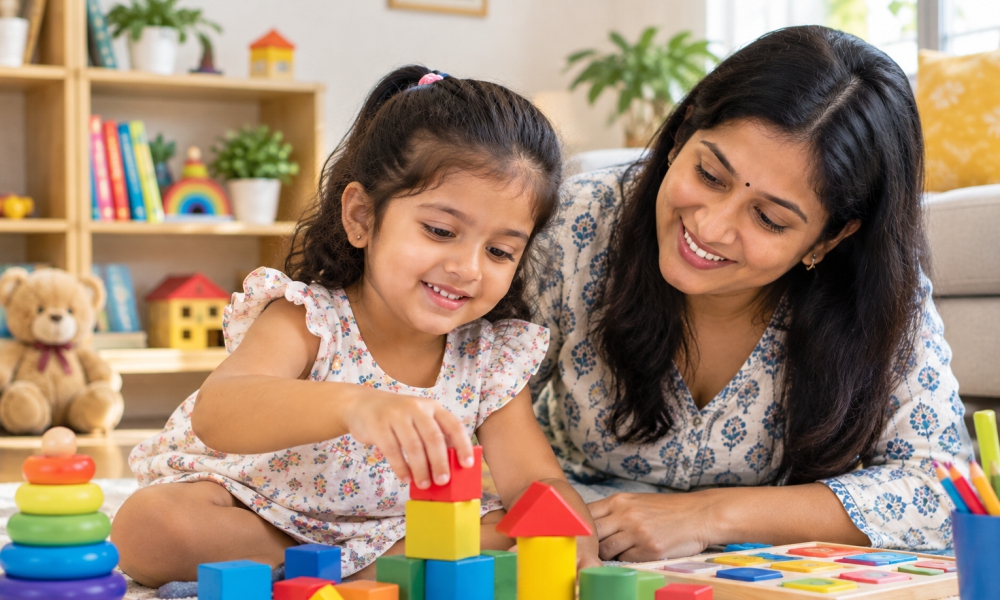
Learning Through Play: How Everyday Fun Builds Real Skills for Jansath Road Kids
Watch a young child stack blocks, splash in water or play pretend, and it looks like pure fun. But something remarkable is happening: they are learning. Learning through play is one of the most powerful ways young children develop, and for parents in Jansath Road, muzaffarnagar, understanding it changes how you see everyday playtime.
Let us explore why play works so well and how simple activities build real, lasting skills.
What Does Learning Through Play Actually Mean?
Learning through play means children develop skills and understanding through hands-on, joyful, self-directed activity rather than formal instruction. When a child plays, they experiment, solve problems, imagine and interact, all of which build the brain far more effectively than passive learning at this age.
In short, play is not a break from learning for young children. Play is how they learn.
How Play Supports Early Learning
Different kinds of play build different skills, often several at once.
Cognitive Development
Sorting, matching, building and simple puzzles develop memory, attention and problem-solving. Children learn cause and effect by testing what happens when they act.
Language and Communication
Pretend play, storytelling and singing expand vocabulary and communication. Children practise words, conversation and expression naturally as they play.
Creativity
Open-ended play, art and imagination let children invent, experiment and think in original ways, building creativity that supports learning for life.
Social and Emotional Development
Playing with others teaches sharing, turn-taking, cooperation and empathy. Children also learn to manage feelings and navigate small conflicts.
Physical Development
Active play and hands-on activities build both gross motor skills (running, climbing, balancing) and fine motor skills (grasping, drawing, threading).
Problem-Solving
Play is full of little challenges: how to make a tower stand, how to fit a shape, how to share a toy. Solving these builds thinking skills and resilience.
Everyday Activities That Turn Play Into Learning
You do not need expensive toys. Simple activities do the job beautifully.
Storytelling
Reading and telling stories builds language, listening and imagination, and creates a love of books.
Building and Construction
Blocks and stacking games develop maths concepts, spatial awareness and motor skills.
Art and Creative Exploration
Drawing, colouring and messy art build creativity, self-expression and fine motor control.
Movement and Outdoor Play
Running, jumping and outdoor games build strength, coordination and confidence.
Simple Science Activities
Exploring water, sand, plants or simple experiments sparks curiosity and early thinking skills.
Why Structured Play Can Be Different From Unstructured Play
Both types of play matter. Unstructured play is free and child-led, which builds creativity and independence. Structured play is gently guided toward a learning goal, such as a counting game or a themed activity, which builds specific skills.
The best early learning blends both. This is the heart of quality play based learning. Little Millennium's Seven Petal Approach is a scientifically designed, play-based curriculum that thoughtfully structures play to build a wide range of skills, using storytelling, singing, messy art and mini science labs, while still keeping learning joyful and child-friendly. With midterm admissions currently ongoing for Developing Roots (Playgroup) and Emerging Wings (Nursery), children aged 2 to 4 can join mid-year and start learning this way right away.
How Parents Can Encourage Play-Based Learning at Home
You can bring play based learning home easily:
● Follow your child's interests and play alongside them
● Ask open questions like "what do you think will happen?"
● Offer simple, open-ended materials (blocks, crayons, boxes)
● Make time for daily outdoor and messy play
● Read and tell stories together every day
● Resist over-directing; let your child lead sometimes
The aim is joyful exploration, not perfect outcomes.
FAQs on Learning Through Play
Q: Why is learning through play important? It matches how young brains develop. Play builds language, thinking, creativity, social and motor skills all at once, far better than passive instruction at this age.
Q: What are the benefits of play-based learning? Stronger communication, problem-solving, creativity, emotional regulation and physical skills, plus a genuine love of learning.
Q: How can I support play-based learning at home? Play alongside your child, offer open-ended materials, follow their interests, read together and make time for outdoor and messy play.
Q: Is structured play better than free play? Neither is better. Free play builds creativity and independence, while structured play builds specific skills. Children need both.
Final Thoughts
Learning through play is not a nice extra. It is the way young children are designed to learn. For parents in Jansath Road, muzaffarnagar, this is wonderful news, because every story, block tower and outdoor adventure is genuinely building your child's future.
If you want a scientifically designed, play-based environment for your little one, explore the Seven Petal Approach at your nearest Little Millennium preschool, where midterm admissions are currently ongoing, and let your child learn the way they learn best, through joyful play.